Table of Contents
ToggleBroccoli Microgreens: Your 2023 guide
Broccoli is known for its nutritional value, but did you know you can also grow it as a microgreen? Microgreens are young vegetables that are harvested shortly after germination, and broccoli is no exception. With a short growing period of only 1-2 weeks, broccoli microgreens are a perfect choice for those who want to add a nutritional boost to their meals quickly and easily.
Preparation of Broccoli Seeds
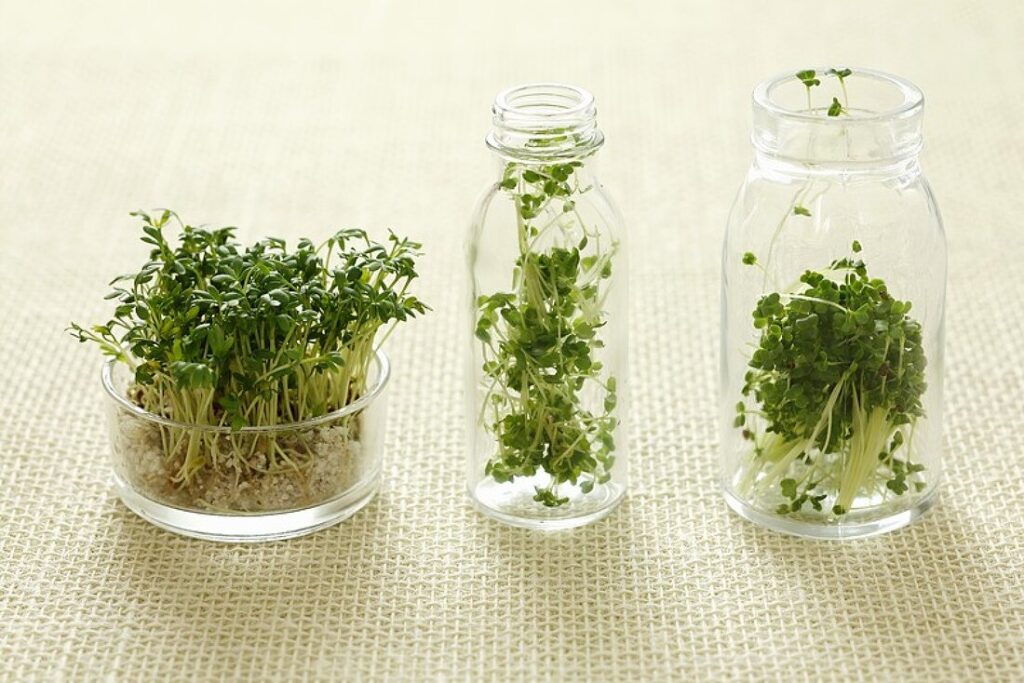
To get started, you must first choose the right seeds. There are a number of broccoli types and all can be grown as microgreens. The classic Waltham 29 is a good default choice, but there are also other options such as Ramoso Santana, Green Calabrese, Purple Sprouting, or Di Cicco. Choose organic seeds from quality brands for the best results.
Before sowing, it is important to soak the seeds to speed up the germination process.
Sowing and Starting
Fill a shallow tray or container with a soilless mix such as coconut coir or a specialized microgreen mix soil.
Make sure the medium drains well and retains moisture. Then spread the broccoli microgreen seeds evenly over the prepared growing medium
Light and Temperature
Broccoli microgreens require plenty of natural light, so place them on a sunny windowsill or use a grow light for 4 to 8 hours daily. Ideal temperatures are around 21℃ with a humidity on the 50% and adequate ventilation.
Watering and Care
Use a spray bottle to water microgreens in the early stages of growth, and consider a watering tray for easier watering. Overwatering and underwatering must be avoided to ensure healthy growth.
Harvest and Storage
Broccoli microgreens are ready to harvest as early as seven days after sowing. Use sharp scissors to cut microgreens near the ground and store them in an airtight container in the refrigerator to extend shelf life.
Nutritional Benefits of Broccoli Microgreens
Broccoli microgreens are known for their nutritional density, making them a healthy choice for those looking to increase their vitamin and mineral intake.
Using Broccoli Microgreens in Cooking
Microgreens are great in salads, on sandwiches, in smoothies or even as a fresh snack on their own6. Their crunchy texture and earthy flavor add a new level of flavor and nutrition to your meals.
Sustainability and Environmental Impact
Growing broccoli microgreens at home is a sustainable practice that allows you to enjoy fresh vegetables with minimal resources. It's an environmentally friendly way to get more greens on your plate!
Broccoli microgreens are a quick, easy and nutritious way to grow your own vegetables. With minimal effort and space, you can have a constant supply of fresh vegetables at your fingertips. From selecting quality seeds to harvesting and storing, the process is simple and satisfying. Additionally, growing microgreens allows you to explore the green world of home growing, even with limited space. So what are you waiting for? Start your green journey with broccoli microgreens and enjoy the countless benefits it brings to your table and your body.
Throughout this guide, we've covered all the necessary steps and tips for growing healthy and delicious broccoli microgreens. From seed preparation to harvesting and cooking, broccoli microgreens are an exciting and nutritious addition to your daily diet. We hope that this guide has given you the necessary knowledge and inspiration to start your own microgreen project. Enjoy your growing journey!
Do you have questions? We have answers!
What are broccoli sprouts good for?
Broccoli sprouts, for example, contain 50 times more antioxidants than fully grown broccoli. Sprouts make a particularly beneficial dietary supplement, especially in the winter months, as they are rich in vitamins, minerals, enzymes, proteins and other nutrients depending on the type of sprout. In general, they are also very low in fat.
What do broccoli sprouts look like?
As sprouts, they become approximately 10 centimeters high. Their leaves are green and slightly larger than those of Broccoli Italica. All FRESH SPROUT seeds are organic and approved for food use as sprouts and microgreens.
When is broccoli bad?
Broccoli is optimally stored in a plastic bag in the fridge, where it can be kept for 6-8 days. Broccoli is suitable for freezing, but should first be blanched for 2-3 minutes. If the flower buds start to turn yellow, the cabbage is too old and should be thrown away.
Is it healthy to eat broccoli every day?
Broccoli is incredibly healthy, and it's worth including broccoli in your diet every day, whether it's in a salad, a stir-fry or a smoothie. It is important to remember that broccoli should be steamed or rinsed quickly to release the beneficial nutrients. Here are some ideas for making healthy food with broccoli.
 English
  Danish